

A waste audit reveals exactly what your business throws away—and 62% of it is likely recyclable.
That's the reality for most commercial waste: more than half could be diverted from landfill, yet it ends up buried anyway. With Malaysia's Environmental Quality (Amendment) Act 2024 now carrying fines of RM500,000 for illegal dumping, Act 672 source-separation rules already in force for commercial premises, and Bursa's ESG reporting deadlines approaching, guessing at your waste streams isn't an option anymore.
You can't manage what you don't measure. GarGeon sees this every time we take on a new client — companies paying for weekly pickups without ever weighing what's in the bin, no idea what's recyclable, no breakdown by waste type. A proper waste audit gives you that baseline so you know exactly where the waste and the money is going.
What Is a Waste Audit?
A waste audit is a systematic measurement of exactly what your business throws away—and where it actually goes.
Think of it like a financial audit, but for your bins. Instead of tracking ringgit, you're tracking kilograms. Instead of expense categories, you're categorising waste streams: paper, plastic, organics, metals, and everything else.
The goal isn't just to know what you're discarding. It's to uncover opportunities: materials you're paying to landfill that could be recycled for revenue, contamination issues inflating your disposal costs, and data gaps that could fail an ESG audit.
Why 2025-2026 is the inflection point:
Three regulatory pressures are converging right now:
- Bursa ESG requirements now demand 3-year rolling waste data from Main Market companies
- EQA 2024 holds waste generators liable for their contractors' disposal practices
- EPR regulations (arriving 2026) will require detailed packaging waste tracking
If you don't have baseline audit data today, you can't demonstrate improvement tomorrow.
What Gets Measured in a Commercial Waste Audit
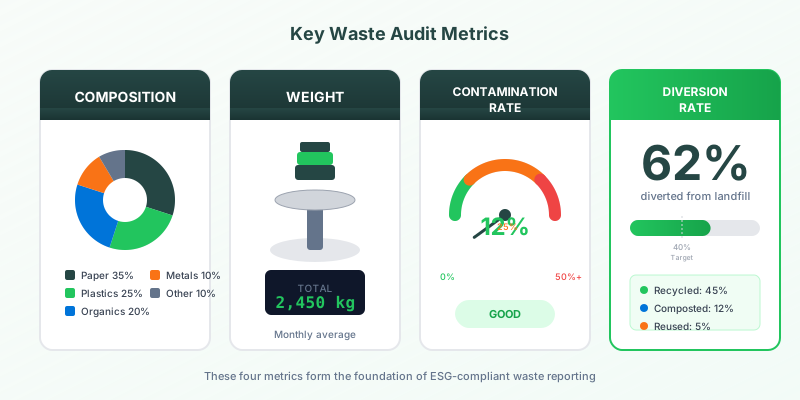
A proper waste audit captures four core metrics:
| Metric | What It Measures | Why It Matters |
|---|---|---|
| Composition | Percentage breakdown by material type | Identifies recyclable streams being landfilled |
| Weight | Kilograms per waste category | ESG standard—weight is what regulators want |
| Contamination Rate | % of recyclables rendered non-recyclable | Reveals training gaps and bin placement issues |
| Diversion Rate | % diverted from landfill (recycled, composted, etc.) | The headline metric for sustainability reports |
Weight vs. Volume: Why It Matters
Many businesses estimate waste by bin volume—"we fill three bins a week." But ESG reporting and regulatory compliance require weight data.
A compacted cardboard bin and a loose plastic bin might look the same but weigh vastly different amounts. Weight-based measurement gives you the accuracy that auditors and sustainability reports demand.
The Six Phases of a Commercial Waste Audit
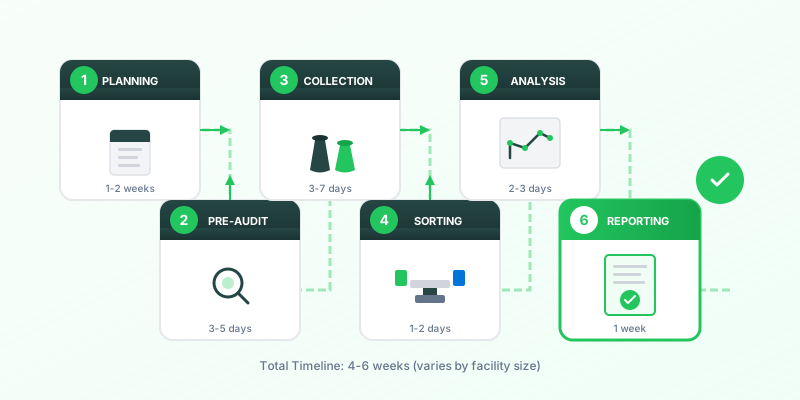
Here's the methodology we use for Malaysian enterprises. Timeline varies based on facility size, but this framework scales from single-site SMEs to multi-location corporations.
Phase 1: Planning & Preparation (1-2 weeks)
What happens:
- Define audit scope (which locations, which waste streams)
- Assemble cross-functional team (facilities, operations, sustainability)
- Gather existing data: current contracts, disposal records, bin schedules
- Prepare equipment: scales, sorting containers, PPE, data collection sheets (need bins? See our waste bin rental options)
Key decision: Sampling vs. comprehensive audit
For facilities under 200 employees, comprehensive audits (every bag over a defined period) are practical. Larger operations often use statistical sampling—auditing representative periods and extrapolating.
Phase 2: Pre-Audit Assessment (3-5 days)
What happens:
- Walk-through of all waste generation points
- Document current bin placement and labelling
- Interview key staff (kitchen, cleaning, loading dock)
- Photograph existing waste infrastructure
What you're looking for: Obvious quick wins. Recyclables in general waste bins. Contamination sources. Unlabelled bins causing confusion.
Phase 3: Collection (3-7 days)
What happens:
- Collect waste samples from all identified generation points
- Maintain chain of custody for accurate tracking
- Store samples safely for sorting phase
Best practice: Run collection during a "normal" operating period. Avoid holiday weeks, unusual events, or periods with temporary staffing.
Phase 4: Sorting & Weighing (1-2 days)
What happens:
- Sort collected waste into predefined categories
- Weigh each category separately
- Document with photographs
- Record contamination levels within recyclable streams
Standard categories for Malaysian commercial audits:
- Paper & cardboard
- Plastics (by resin type if detailed audit)
- Glass
- Metals
- Organics (food waste, landscaping)
- Textiles
- E-waste
- Residual (true non-recyclables)
Phase 5: Data Analysis (2-3 days)
What happens:
- Calculate composition percentages
- Compare against industry benchmarks
- Identify highest-impact improvement opportunities
- Quantify potential cost savings and revenue from recyclables
Key outputs:
- Waste composition breakdown (pie chart)
- Diversion rate calculation
- Contamination analysis by stream
- Cost allocation by waste category
Phase 6: Reporting & Action Planning (1 week)
What happens:
- Compile findings into actionable report
- Prioritise recommendations by impact and implementation difficulty
- Set measurable targets with timelines
- Assign ownership for each action item
The report should answer:
- What are we actually throwing away?
- What should we be diverting instead?
- What's the financial impact of current practices?
- What can we change immediately vs. over 12 months?
Malaysian Regulatory Drivers: Why Audits Are Now Essential
Bursa Malaysia ESG Requirements
Listed companies now need three years of rolling waste data for sustainability reports. This isn't optional—it's a listing requirement.
What auditors expect to see:
- Total waste generated (tonnes)
- Waste diverted from landfill (%)
- Waste by disposal method
- Year-over-year comparison
Without baseline audit data, you can't demonstrate the improvement trajectory that investors and regulators demand.
EQA 2024: Generator Liability
Here's what most business owners miss: under Malaysian law, you're liable for your waste even after it leaves your premises.
If your contractor dumps illegally, the liability lands on you, not them — illegal dumping under EQA 2024 carries a minimum fine of RM50,000 and a maximum of RM500,000, and directors can be held personally liable. A waste audit creates the documentation trail proving proper disposal through licensed facilities.
Related: Understanding the hidden costs of unlicensed waste collectors →
EPR 2026: Building the Data Foundation
Extended Producer Responsibility regulations arrive in 2026. Producers and importers of packaging will need to track and report packaging waste recovery.
The businesses that struggle most with EPR compliance are those starting from zero data. Audits conducted now establish the baseline that makes 2026 reporting straightforward.
What Malaysian Companies Are Already Doing
Nestlé Malaysia: 100% Zero Waste to Landfill
Nestlé achieved zero waste to landfill across Malaysian manufacturing operations by:
- Conducting detailed waste audits at each facility
- Identifying recyclable streams being landfilled
- Partnering with certified recyclers for difficult waste categories
- Implementing organics-to-composting programmes
AEON: Alpha Angle Organic Waste Composting
AEON Malaysia diverts organic waste from retail operations through their Alpha Angle composting partnership. This required audit data to quantify organic waste volumes and justify the infrastructure investment.
National Context: The Gap We Need to Close
Malaysia's current recycling rate: 35.38%
National target: 40% by 2025
That gap—nearly 5 percentage points—represents millions of tonnes of recoverable materials going to landfill annually. Every business that conducts an audit and improves diversion contributes to closing it.
From Audit to Action: What Happens Next
An audit without action is just expensive curiosity. Here's how to translate findings into results.
Quick Wins (Week 1-4)
- Improve bin signage: Clear labels with photos reduce contamination immediately
- Relocate bins: Put recycling where waste is generated, not just at exits
- Staff briefings: 15-minute sessions explaining what goes where
- Remove contaminants: If coffee cups keep ruining paper recycling, provide separate liquid disposal
Medium-Term Actions (Months 1-6)
- Organics programme: Food waste composting or biogas partnerships for F&B operations
- Supplier negotiations: Armed with volume data, negotiate better recyclable pricing
- Compaction equipment: Reduce collection frequency for high-volume recyclables
- Procurement review: Identify single-use items that could switch to reusable alternatives
Ongoing Monitoring
Annual comprehensive audit: Full methodology, all waste streams, detailed analysis
Quarterly mini-audits: Spot-check sampling to verify systems are working and catch drift early
The businesses that achieve lasting waste reduction are those that treat auditing as continuous, not one-time.
The Bottom Line
A waste audit isn't about environmental guilt. It's about operational visibility.
When you know exactly what you're throwing away—and what it's costing you—you can make informed decisions. Cut disposal costs. Generate recyclable revenue. Build the data foundation that regulators and investors increasingly demand.
For Malaysian enterprises facing RM10M penalty exposure and imminent ESG deadlines, audits have moved from "nice to have" to "essential infrastructure."
The question isn't whether to audit. It's whether to do it now—with time to act on findings—or later, when you're scrambling to meet a deadline.
Ready to Understand Your Waste?
GarGeon conducts waste audits for Malaysian enterprises and builds ongoing measurement systems that satisfy compliance requirements.
What we provide:
- Complete waste composition analysis
- Audit-ready ESG data formatting
- Licensed contractor verification
- Ongoing waste tracking after audit completion
Explore our services:
- Digital Waste Management — Track every pickup across all locations
- Sustainability Data — Export audit-ready ESG data
- Recycle Solutions — Turn waste into revenue
Request a waste audit consultation →
References
Malaysian Regulatory Sources:
- Bursa Malaysia Sustainability — ESG disclosure requirements
- SWCorp — Solid Waste Corporation Malaysia statistics
Industry Research:
- Great Forest Study — Commercial waste diversion potential (62% divertible finding)
- OECD Environmental Outlook — Malaysian waste composition benchmarks
Related Reading:


