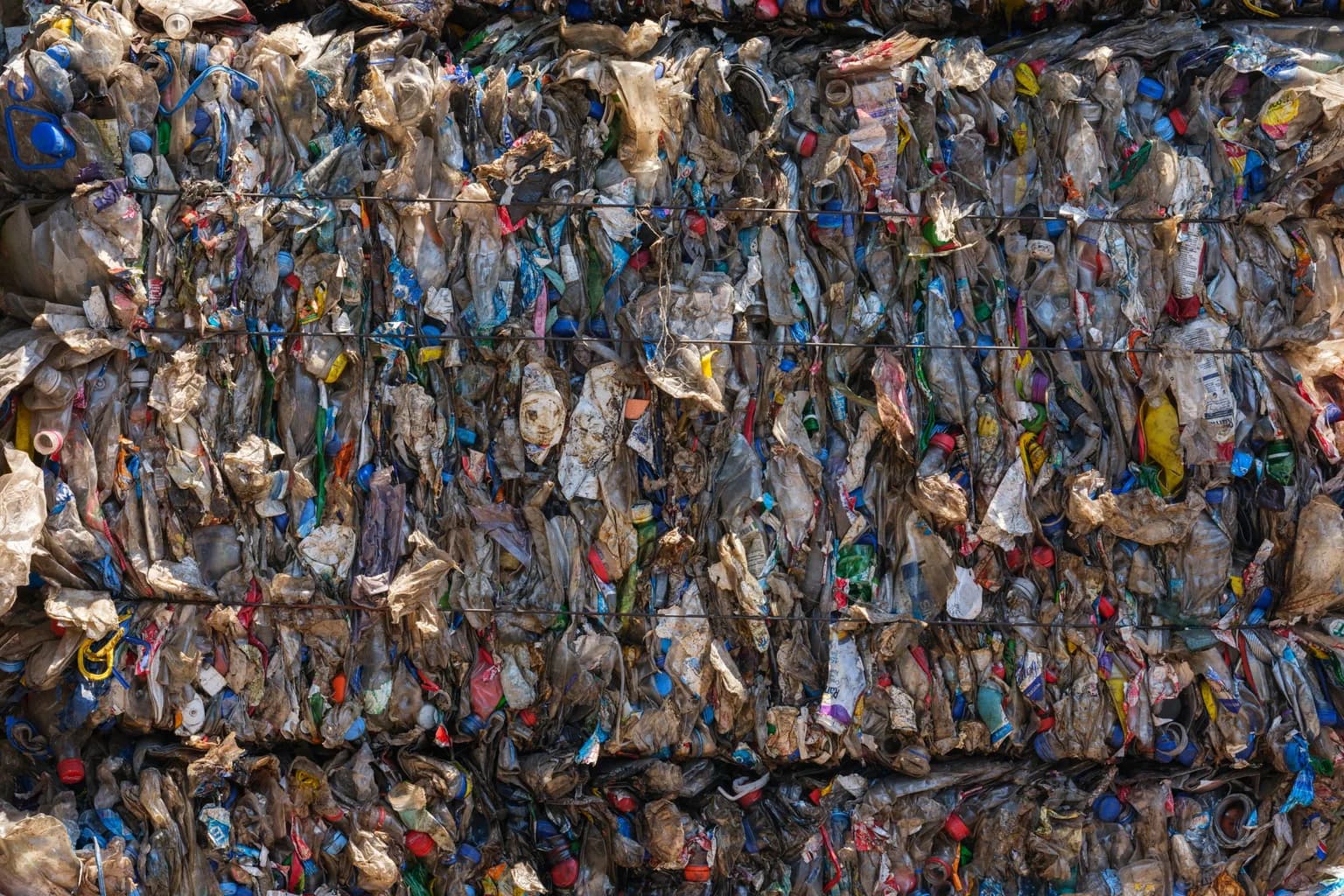
Here's a number that changes how you should think about waste: RM495.5.
That's the per-tonne difference between sending metal scrap to landfill (costing you RM95.5) versus recycling it (earning you around RM400). In other words, every tonne of metal you landfill costs your business roughly RM495.5 compared to what you could have kept.
And the gap only widens over time. Landfill gate fees keep climbing, transport and admin stack on top, and the recyclables you're throwing away hold real market value you never see. This isn't about saving the planet, though it does that too. It's about money.
This guide covers the cost comparison specifically. For the full operational picture — regulations, disposal options, contractors, and reporting — start with our guide to waste management in Malaysia.
Through our Recycle Solutions service, GarGeon has helped businesses like Signature Market cut waste costs by 70% — by separating recyclables at source and sharing the rebate back rather than letting it disappear downstream. Every ringgit you spend sending recyclable material to landfill is a ringgit you could have kept, or earned back.
The Hidden Math Most Businesses Get Wrong
Most business owners think they know their waste costs. They look at the invoice from their collector—maybe RM5,000 a month—and file it under "cost of doing business."
But that invoice tells you almost nothing about what you're actually paying.
Start with what disposal at Jeram Sanitary Landfill costs:
Landfill disposal at Jeram costs from RM95.5 per tonne for commercial waste — the rate our partner collectors are charged, passed on to you at cost with no additional charge by GarGeon — and that's before transport, admin, and compliance costs. The published council tipping fee at Jeram is RM43 per tonne (from July 2023). Disposal does not stay flat. Tipping fees in Selangor have risen structurally over the years, roughly 5% every three years, and there's no reason to expect that pattern to reverse. For the wider picture on how landfill capacity and cost are trending, see our guide to landfills in Malaysia.
So the figure on your invoice today is the floor, not the ceiling. Every tonne you keep out of landfill is a tonne you stop paying a rising fee on.
The perception problem:
When you pay a flat monthly fee, you lose visibility into volume, composition, and what you could be diverting. That opacity is expensive.
The businesses that understand their waste—what's in it, what it weighs, where it goes—are the ones finding the RM495.5/tonne opportunities that everyone else misses.
Landfill Cost Malaysia: Breaking Down True Costs
Landfill isn't just a disposal cost. It's a compounding liability with three cost layers most businesses ignore.
Direct Costs
| Waste Type | Disposal cost |
|---|---|
| Commercial / municipal waste | From RM95.5/tonne (Jeram) |
| Industrial waste | RM100-120/tonne |
| Construction debris | RM80-100/tonne |
These are the visible costs — what shows up on invoices. On top of disposal sits the haulage: heavier, mixed loads mean more trips and higher transport charges. Our commercial waste collection cost guide breaks down where that money actually goes.
Hidden Costs
But landfill creates expenses that don't appear on the waste collector's bill:
- Transport costs: Heavier mixed waste means more trips and higher fuel charges
- Administrative burden: Staff time reconciling pickup schedules, chasing tickets
- Storage space: Compactors, bin rental, dock space for loading
- Compliance documentation: Landfill tickets required for license renewals under P.U. A279
Every hour your operations manager spends untangling waste logistics is an hour not spent on core operations.
Future Costs (The Direction of Travel)
This is where landfill quietly gets more expensive. The gate fee is a structural cost that trends one way — up.
- Fees rise with the tipping-fee cycle. Selangor tipping fees have moved up roughly 5% every three years. Applied to a RM95.5/tonne disposal cost, that's a slow but steady climb, and it compounds across a long contract.
- Capacity is tightening. The Klang Valley's landfills are filling, and scarce capacity pushes prices up, not down.
- Transport rises with volume. The more you landfill, the more trips you pay for. Cutting the tonnage cuts the haulage bill alongside the gate fee.
None of this depends on any single new regulation. It's the ordinary direction of disposal cost — and the reason locking in a diversion habit now is cheaper than scrambling later.
The Recycling Alternative: From Cost to Revenue
What if your waste line item moved from the expense column to the revenue column?
That's what recycling enables—not for all materials, but for enough that the maths is compelling.
Material Values in Malaysia
| Material | Approximate Value | Notes |
|---|---|---|
| Metal scrap | RM400/tonne | Depends on grade, steel vs aluminium |
| Plastic (mixed) | RM100/tonne | Clean, separated plastic commands premium |
| Cardboard | RM50-80/tonne | Fluctuates with global paper markets |
| Paper (office) | RM70-100/tonne | Shredded accepted but lower value |
| Glass | RM20-30/tonne | Colour-separated is worth more |
These aren't theoretical numbers. They're what Malaysian recyclers are paying right now.
Beyond Material Sales
The revenue from selling recyclables is only part of the story. A documented recycling programme creates value in ways that don't show up on the scrap-yard receipt:
Tender credibility: Companies with documented recycling and disposal records are better placed to win tenders that ask for sustainability credentials. When a buyer asks how you handle your waste, "here's the weight, the destination, and the recovery rate" beats a shrug.
Reporting without spreadsheets: Verified pickup data — weight, timestamp, destination — feeds straight into a sustainability report, instead of being reconstructed from guesswork at year-end.
Brand value: In B2C sectors, sustainability credentials influence purchasing decisions. In B2B, they influence procurement shortlisting. This aligns with Malaysia's push towards a circular economy model.
Supply chain preference: Major buyers increasingly ask suppliers to demonstrate responsible practices. If you can't show where your waste goes, you're a weaker name on the shortlist.
5-Year Total Cost of Ownership: A Worked Example
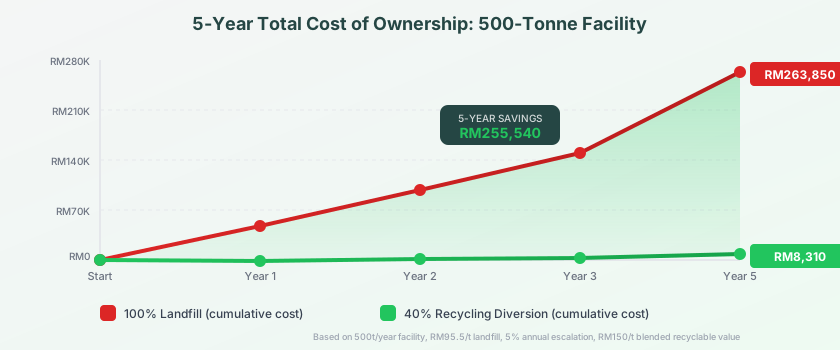
Let's get concrete. The figures below are illustrative — a worked example for a hypothetical manufacturing facility generating 500 tonnes of waste a year, not a quoted result. Your own numbers depend on your tonnage, your material mix, and the commodity prices on the day.
Assumptions (illustrative):
- 500 tonnes/year total waste
- 40% recovered as recyclables (200 tonnes)
- Landfill disposal cost: RM95.5/tonne, rising ~5% every three years (the Selangor tipping-fee pattern), so RM95.5 in years 1-3 and RM100.3 in years 4-5
- Blended recyclable value: RM150/tonne, held flat (real prices move with the market)
Scenario A: 100% Landfill
| Year | Volume | Cost/Tonne | Annual Cost |
|---|---|---|---|
| 1 | 500t | RM95.5 | RM47,750 |
| 2 | 500t | RM95.5 | RM47,750 |
| 3 | 500t | RM95.5 | RM47,750 |
| 4 | 500t | RM100.3 | RM50,150 |
| 5 | 500t | RM100.3 | RM50,150 |
| 5-Year Total | RM243,550 |
Scenario B: 40% of Waste Recovered for Recycling
| Year | Landfill (300t) | Recycling Rebate (200t) | Net Cost |
|---|---|---|---|
| 1 | RM28,650 | -RM30,000 | -RM1,350 |
| 2 | RM28,650 | -RM30,000 | -RM1,350 |
| 3 | RM28,650 | -RM30,000 | -RM1,350 |
| 4 | RM30,090 | -RM30,000 | RM90 |
| 5 | RM30,090 | -RM30,000 | RM90 |
| 5-Year Total | -RM3,870 |
The difference: roughly RM247,000 over five years — where a negative net cost means the rebate covered the disposal bill and left a little over.
That's not a rounding error. It's roughly a quarter of a million ringgit, from changing how you handle materials you're already generating. Remember what's actually happening here: the recyclables are pulled out at source and recycled, while the general waste still goes to landfill — but compliantly, with every load documented. And if landfill fees rise faster than this gentle assumption, the gap only widens. For the full argument, see our business case for waste diversion.
How Rebate-Share Recycling Turns the Cost Around
The worked example above quietly assumes something most businesses never get: a rebate on the recyclables they hand over. That's the piece that turns waste from a pure cost into a partial offset — and it's the model our Recycle Solutions service is built on.
Here's the problem it fixes. Most contractors do one of two things with your recyclables. A general hauler bundles everything into one bin and tips it at the landfill, so the material is disposed of, never sold — no rebate is possible. Or a recycler collects your separated cardboard and metal, sells it downstream, and keeps the revenue. Either way, the market value of your own material ends up in someone else's pocket.
Recycle Solutions is built the other way round. GarGeon runs collection across KL, Selangor and Johor through a licensed partner network, pulls your recyclables out at source, and shares the material rebate back to you — usually as a credit on your invoice. The general waste that's left still goes to landfill, but compliantly, with every load documented. Nothing is dumped blindly, and nothing valuable is quietly sold on without you seeing a cent.
Two things are worth saying plainly:
- The prices are market snapshots, not promises. Scrap rates move with global commodity markets. We track current rates so we know what to pay back, but nobody can guarantee a fixed price a year out.
- The rebate stacks on the avoided disposal cost. Every tonne diverted is a tonne you don't pay RM95.5 to landfill, plus whatever the material earns. For a full breakdown of what your cardboard, metal and plastic are actually worth, see our recycling rebate guide.
Why Landfill Costs Keep Rising
Landfill is one of those costs that only moves in one direction. Here's what disposal alone looks like if it keeps following the Selangor tipping-fee pattern of roughly 5% every three years:
| Year | Disposal cost (structural rise) |
|---|---|
| Today | RM95.5/tonne |
| +3 years | ~RM100/tonne |
| +6 years | ~RM105/tonne |
| +9 years | ~RM111/tonne |
That's before transport, which climbs with every extra trip a heavier residual bin needs. Two structural forces sit behind it:
- Tightening capacity. The Klang Valley's landfills are filling. Scarce capacity means fee reviews go up, not down.
- The cost of the material you throw away. Every recyclable tonne in your residual bin is value you're paying to bury instead of sell.
A carbon tax on waste has been proposed in Malaysia, but with no confirmed rate or start date it's not something to build a budget around today. The case for diverting recyclables doesn't need it: rising gate fees, transport, and the rebate you're currently leaving on the table already make the maths work.
The advantage compounds for whoever starts first. A business that builds the diversion habit now — separation at source, a collector who shares the rebate, verified records — locks in a lower cost base while competitors keep paying a rising fee on material they could have sold.
Related: Malaysia Waste Management Compliance 2026: What Every Business Owner Needs to Know
Waste Management Action Framework: From Landfill to Value
Transitioning from landfill-dependent waste management to a recycling-integrated model isn't instant. But it doesn't have to be overwhelming. Here's the phased approach:
Phase 1: Waste Audit (Weeks 1-4)
You can't improve what you don't measure. A proper waste audit tells you:
- What materials are in your waste stream
- What volumes you're generating
- What's currently being landfilled that could be recycled
- Where contamination is reducing recyclable value
This is your baseline. Every decision afterward depends on it.
Quick start: For one week, photograph your bins before pickup. Separate a sample by material. Weigh by category. Even rough data beats assumptions.
Phase 2: Separate & Store (Months 1-3)
Once you know what's in your waste:
- Source separation: Put recycling bins where waste is generated (not just at exits)
- Clear labelling: Photos on bins reduce contamination
- Staff briefings: 15-minute sessions explaining what goes where
- Storage assessment: Do you have space for baled cardboard or separated metals?
The goal is clean, separated streams that command higher prices.
Phase 3: Partner & Scale (Months 3-6)
With separated materials, you're ready to monetise:
- Choose a collector who shares the rebate: Ask directly, and get the split in writing. Some recyclers share the material revenue, many keep it — that single clause decides whether your recyclables earn you anything. It's exactly what GarGeon Recycle Solutions is built to do.
- Negotiate on your data: Volume and weight figures give you the leverage to negotiate rates and grades.
- Establish pickup schedules: Match collection frequency to how fast each stream builds up.
- Document everything: Certificates, weights, destinations — the proof that a rebate and a diversion actually happened.
Phase 4: Track & Report (Ongoing)
Compliance requires evidence. ESG reports require data. Improvement requires visibility.
- Digital tracking: Every pickup logged with weight, type, destination
- Diversion rate monitoring: Monthly calculation of landfill vs. recycled
- Cost/revenue reporting: Actual ROI by material stream
- Compliance documentation: Audit-ready at all times
Related: Digital Waste Management — Track every pickup across all locations
The Bottom Line
The RM495.5/tonne swing between landfilling metal and recycling it isn't an anomaly. It's a signal.
Across material types, the maths increasingly favours recovery over disposal. Landfill fees keep climbing, transport rises with every heavy load, and the recyclables in your bin hold value you're currently paying to bury. That gap only widens with time.
The businesses that come out ahead are the ones that treat waste not as a cost to minimise but as a resource to recover — recyclables sold and rebated back, general waste disposed of compliantly and on the record. The habits that make that work — audit data, separation at source, a collector who shares the rebate, verified records — take a little time to build.
The question isn't whether to start. It's whether you start now, with time to optimise, or later, when you're scrambling to comply.
Ready to Turn Waste into Value?
Want to know what your bins are actually worth? Book a Consultation → and we'll start with a free waste audit, then show you where the recycling rebate is and how Recycle Solutions shares it back — across KL, Selangor and Johor. For construction and commercial projects, see our RORO bin rental options.
References
Malaysian Sources:
- MBSJ landfill rate announcement 2023 — Jeram tipping fee increase, 2023
- Bursa Malaysia Sustainability — ESG disclosure requirements
- Malaysian Green Technology Corporation — Circular Economy Blueprint 2025-2035
Related Reading: