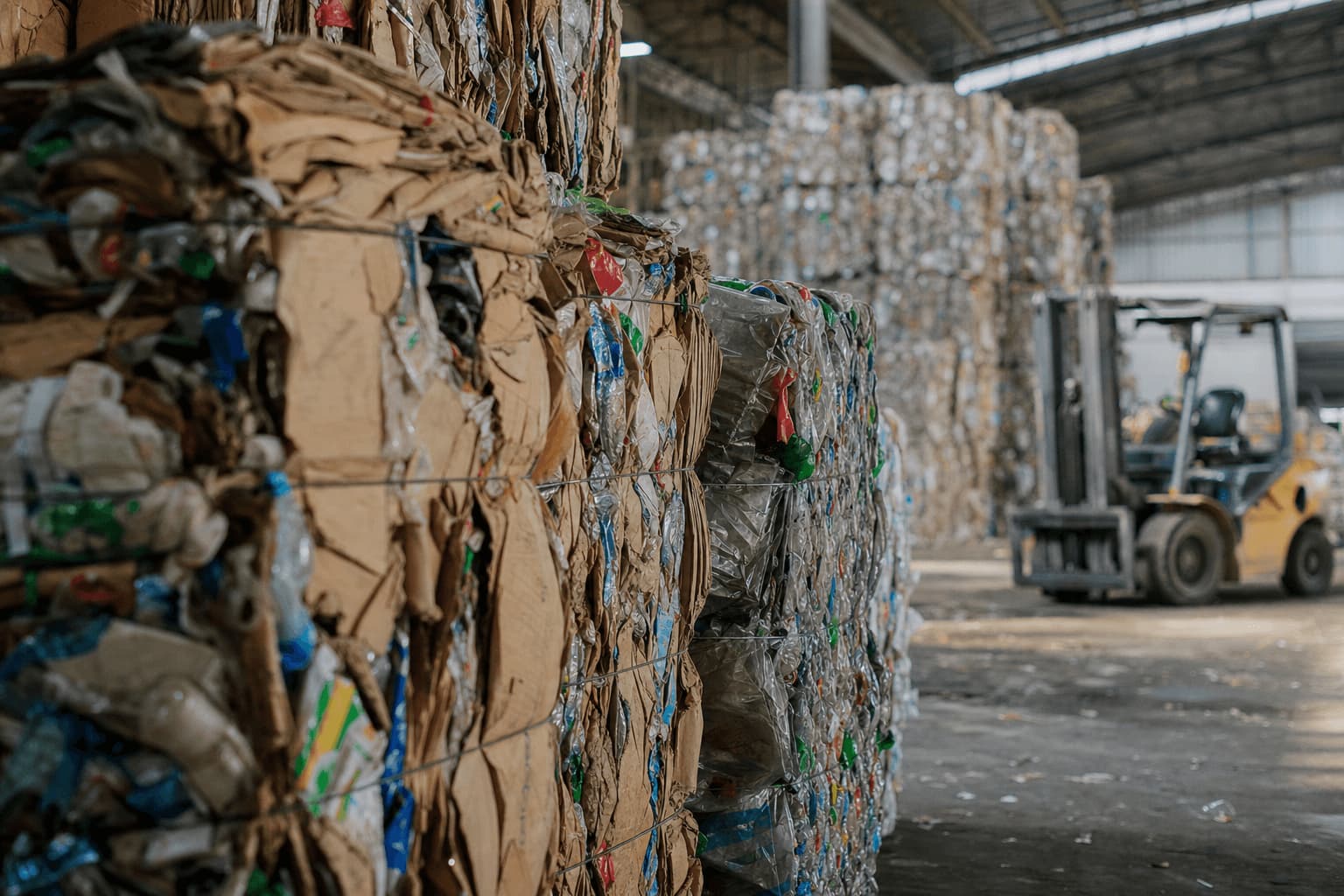
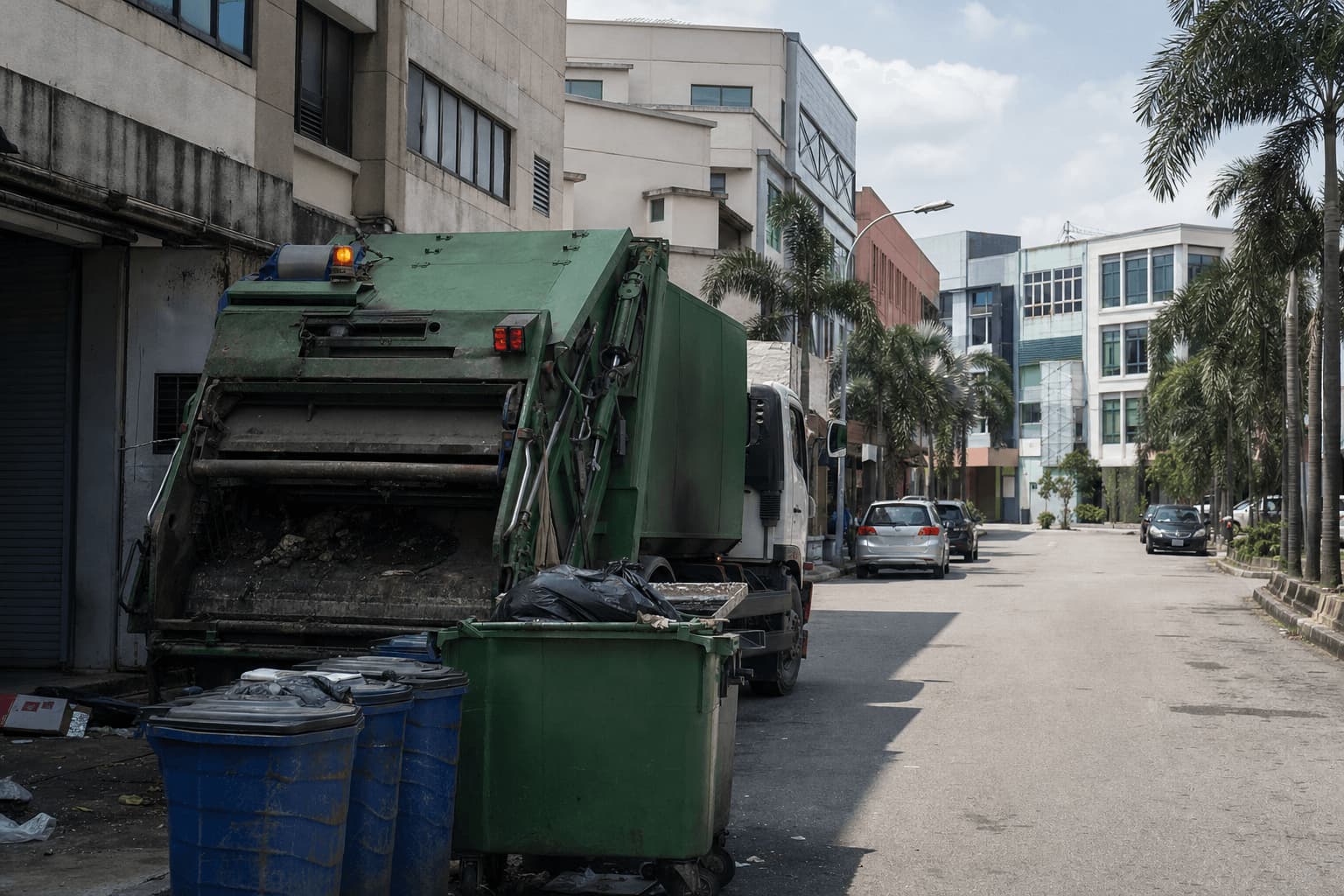
Malaysian businesses face five waste problems, and the first is that landfills are filling up. The others are one bin for everything, recycling nobody can trace, rules that change by council and missing waste data. The biggest opportunity is separating your recyclables. Mixed waste earns nothing, while separated metal, cardboard and PET plastic sell. As an indicative range, ferrous scrap fetches RM500–900 a tonne. Disposal costs from RM95.50 a tonne, the rate our partner collectors are charged.
Every tonne sent to landfill is money that could have been recovered. Every gap in compliance documentation can bring a compound, a fine paid to settle without going to court. And every quarter without waste data makes your sustainability report harder to write.
GarGeon handles waste for 1,500+ locations across Malaysia. Companies that deal with this early save serious money. Companies that wait end up paying more. They pay higher disposal fees and regulatory fines, and their recyclables go to landfill instead of being sold.
The 5 Core Challenges
1. Landfill Dependency — Running Out of Space
Malaysia generates 39,078 tonnes of solid waste every single day (SWCorp, 2024). That's roughly 1.17 kg per person — above the global average — and the number keeps climbing.
82.5% of collected waste went to landfill in 2021, according to MIDA. SWCorp, the federal agency that enforces Malaysia's solid waste law, put the national recycling rate at 37.9% in 2024. The two figures come from different years and different series, and count recovery differently, so they do not net to 100% — worth knowing before you quote either one in a sustainability report.
Compare that 37.9% to South Korea (59%), Germany (67%), or even neighbouring Singapore (52%), and the gap is still uncomfortable. Malaysia is improving, but it is improving from a long way back.
Malaysia has about 135 landfills. Only 22 are sanitary landfills, which are lined and capture the polluted liquid and gas from the waste. The rest are open dumps or partly controlled sites. This matters because:
- Landfill capacity is finite. Several major landfills in Selangor and Johor are approaching capacity limits. When a landfill closes, the next one is further away — which means higher transport costs for everyone.
- Disposal costs are rising. At Jeram Sanitary Landfill (Selangor), disposal costs from RM95.50 a tonne — the rate our partner collectors are charged, passed on to you at cost. With capacity shrinking and demand growing, expect continued increases.
- No new landfills are being built. Community opposition (NIMBY) and environmental regulations make new landfill approvals extremely difficult. The system is designed to discourage landfilling — but most businesses haven't adjusted.
For businesses, this means disposal costs will only go up. The question isn't whether to reduce landfill dependency, but how fast.
2. Low Source Separation in the Commercial Sector
Walk into most Malaysian offices, restaurants, or factories, and you'll find one thing in common: a single waste bin. Everything — paper, plastic, food waste, general waste — goes into the same container.
This is a problem because:
- Mixed waste is worthless. Once recyclables are contaminated with food waste or liquids, they lose their value. Paper contaminated with food waste loses its resale value entirely.
- Collectors don't separate. Most waste collection contracts don't incentivise separation. The collector gets paid per trip regardless of what's in the bin. So everything gets mixed, loaded, and sent to landfill.
- Businesses don't see the waste. Without data on what's actually in your bins, there's no way to know what could be diverted, meaning kept out of landfill. Most businesses have never done a basic waste composition analysis.
The result: businesses pay full disposal fees on waste that includes valuable recyclable materials. They're literally throwing money away.
3. The Informal Recycling Economy
Malaysia has a vibrant informal recycling sector — scrap dealers, waste pickers, and small-scale operators who collect and process recyclables. They play an important role, but the informality creates problems:
- No traceability. When recyclables leave your premises through informal channels, there's no documentation. You can't prove diversion rates for ESG reporting. ESG reports cover a company's environmental, social and governance record, and waste sits under environmental.
- Revenue leakage. Your waste collector may be selling your recyclables to scrap dealers and pocketing the revenue — while you pay full disposal fees. Without weight records and composition tracking, you'd never know.
- Quality inconsistency. Informal recycling often means low-quality processing. Contaminated recyclables get rejected and end up in landfill anyway.
The fix isn't to eliminate informal recyclers — they provide essential services. The fix is documentation and accountability: knowing what leaves your site, where it goes, and what happens to it.
4. Regulatory Fragmentation
Waste regulation in Malaysia is split across multiple agencies, and the boundaries aren't always clear:
- SWCorp (Solid Waste Corporation) regulates solid waste management under Act 672 in the six states and two federal territories that have adopted it (Selangor is not under it yet, though a phased extension was announced on 29 July 2026).
- Local councils (MBSA, MBPJ, MPK, DBKL, etc.) handle enforcement and licensing at the municipal level. Requirements vary by council.
- Scheduled waste falls under completely separate regulations and specialised collectors — this is hazardous material like chemical waste, medical waste, and industrial solvents. Most commercial businesses don't generate scheduled waste.
For businesses, this means:
- Different councils, different rules. A factory in Shah Alam (MBSA) may face different requirements than one in Petaling Jaya (MBPJ), even though they're 20 minutes apart.
- Documentation requirements vary. Some councils require disposal tickets for every collection; others don't enforce it. But when they do audit, you need to produce records.
- Compliance is reactive, not proactive. Most businesses only think about waste compliance when they receive a compound notice. By then, they're already paying penalties.
5. Lack of Waste Data
Ask most Malaysian business owners these questions:
- "How much waste does your company generate per month?"
- "What percentage is recyclable?"
- "What does waste disposal cost you per tonne?"
- "Where does your waste actually end up?"
Most can't answer any of them. And that's not because they don't care — it's because the data doesn't exist.
Why this matters:
- You can't improve what you don't measure. Without baseline data, every "sustainability initiative" is guesswork.
- Bursa Malaysia ESG disclosure increasingly requires quantitative waste metrics from listed companies. "We recycle" isn't sufficient anymore — you need tonnes, percentages, and trends.
- Cost optimisation is impossible without data. You can't negotiate better rates with collectors if you don't know your volumes, composition, or frequency patterns.
The businesses that start measuring now will be able to demonstrate year-over-year improvement. The ones that start later will be scrambling to catch up when disclosure requirements tighten.
The Opportunities
1. Cost Savings from Proper Segregation
This is the most immediate opportunity, and indicative market ranges show why:
| Material | Landfill Cost | Recycling Value | Net Swing |
|---|---|---|---|
| Ferrous metal scrap | RM95.50/tonne (disposal) | RM500–900/tonne (revenue) | RM595.50–995.50/tonne |
| Clean cardboard | RM95.50/tonne (disposal) | RM200–350/tonne (revenue) | RM295.50–445.50/tonne |
| Clean plastic (PET) | RM95.50/tonne (disposal) | RM350–650/tonne (revenue) | RM445.50–745.50/tonne |
| Mixed waste | RM95.50/tonne (disposal) | RM0 | RM0 |
The pattern is clear: separated recyclables have value; mixed waste has none. Every tonne you divert from landfill is money saved on disposal fees AND potential revenue from recycling.
Work it out for your own site rather than trusting a worked example built on someone else's waste mix. You need three numbers:
- Your monthly tonnage, from your collector's weighbridge tickets or delivery orders.
- Your recyclable share, which only a waste audit gives you honestly — most operators guess high.
- Your grade quality, because the rates above are for clean, separated material. Contaminated recyclables earn the mixed-waste rate, which is zero.
Multiply your recyclable tonnage by the net swing for each material in the table. That figure is your ceiling, not your forecast — real recovery depends on how well separation at source actually holds up once bins are in place.
2. Sustainability Reporting Demand
Bursa Malaysia's Enhanced Sustainability Reporting Framework requires listed companies to disclose waste management practices and metrics. This creates both pressure and opportunity:
- Compliance pressure: Companies that can't quantify their waste footprint will struggle with mandatory disclosures.
- Competitive advantage: Companies with strong waste metrics and documented improvement trends stand out to investors and partners.
- Supply chain cascade: Large listed companies are increasingly requiring waste management data from their suppliers and vendors. If you're in their supply chain, they'll eventually ask.
The opportunity: businesses that build waste data infrastructure now will find it much easier to comply when requirements expand — and they'll have a track record of improvement to show.
3. Carbon Footprint Reporting
Malaysia's carbon tax was due to start in 2026 with the iron, steel and energy sectors. In April 2026 the government put it on hold. No rate or new start date has been confirmed, and waste was not in scope. The link to waste is through emissions reporting:
- Landfill methane is one of the largest sources of greenhouse gas emissions in the waste sector. Organic waste decomposing in landfills produces methane — about 28 times as warming as carbon dioxide over 100 years, and about 80 times over 20 years.
- Reduced landfilling = a smaller footprint. Businesses that divert organic and recyclable waste from landfill will have a lower carbon footprint to report.
- Documentation matters. To claim carbon reductions, you need to prove diversion. That means weight records, disposal tickets, and recycling documentation.
The businesses preparing now — measuring waste, separating at source, documenting disposal — will have the figures ready when a customer or an auditor asks for them.
4. Circular Economy Programmes
A circular economy keeps materials in use by reusing and recycling them, instead of burying them in landfill. The Malaysian government and private sector are investing in circular economy initiatives:
- Extended Producer Responsibility (EPR) regulations are being developed, which will require manufacturers to take responsibility for end-of-life packaging.
- National recycling targets aim to increase the recycling rate to 40% by 2025 (the target has been missed, but the policy direction is clear).
- Private sector pilots — several large Malaysian corporations are running closed-loop programmes for specific waste streams (e-waste, packaging, food waste).
For businesses, the circular economy isn't just policy language. It's a growing network of recycling buyers, waste-to-resource converters, and compliance service providers. Getting connected early means better rates and more options.
5. Technology-Enabled Visibility
The biggest transformation in waste management isn't trucks or bins — it's data. Technology now enables:
- Digital delivery orders with a timestamped photo of every collection, so a disputed pickup is settled by the record rather than by memory
- Weight-based billing instead of flat-rate contracts (so you only pay for what you actually generate)
- A dashboard across every site showing waste volumes, composition, costs, and trends in one place
- Compliance documentation pulled together for you — landfill tickets, recycling certificates, disposal records
This visibility turns waste from an opaque cost centre into a line you can actually manage. When you can see what you're generating, where it goes, and what it costs, you can make informed decisions.
What Malaysian Businesses Can Do Today
You don't need a complete sustainability overhaul to start. Here are four practical steps:
Step 1: Understand Your Waste Composition
Before you can improve anything, you need a baseline. A basic waste composition analysis answers: What materials are in your waste stream? What percentage is recyclable? What's contaminated? This can be as simple as monitoring your bins for a week and categorising what comes out.
Step 2: Implement Source Separation
Once you know what's in your waste, start separating at the point of generation. The most impactful first step for most businesses: separate dry recyclables from general waste. Even this single change keeps recyclable material out of your general waste bin.
Step 3: Choose Waste Partners Who Provide Documentation
When evaluating waste collection providers, ask: Do you provide disposal documentation for every collection? Can you give me weight records? Do you have recycling partners for diverted materials? The right partner should provide a complete paper trail — not just a monthly invoice.
Step 4: Track and Report
Start tracking basic metrics monthly: total waste generated, percentage recycled, disposal cost per tonne. Even a simple spreadsheet is better than nothing. Over time, this data becomes your baseline for improvement targets and sustainability reporting.
Start With Visibility
Sustainable waste management isn't a one-time project — it's an ongoing operational improvement. And like any improvement, it starts with understanding where you are today.
The businesses that will benefit most from Malaysia's sustainability transition aren't the ones with the biggest budgets. They're the ones that start measuring, start separating, and start building a data trail now.
The gap between "we think we manage waste well" and "we can prove we manage waste well" is where the opportunity lives.
Want to understand your waste footprint? Book a consultation and we'll help you get started.