To manage waste across a Malaysian mall or retail property, you put every tenant, every stream, and every pickup behind one dashboard. You stop letting each shop run its own collector in isolation. That is what GarGeon Connect does. One partner coordinates collection across the whole property. It logs each pickup with weight, timestamp, and photo, and rolls the lot into one property-wide report. Meanwhile, the high-value cardboard and packaging a retail site produces gets separated at source for recycling and a rebate share.
Key takeaways
- A mall is dozens of separate waste generators under one roof. Each tenant appoints its own collector, and management is left with no reliable number for the whole building.
- Retail runs on cardboard and packaging. That is the sector's single biggest recyclable — and a rebate opportunity, but only if it is separated at source instead of crushed into general waste.
- Food courts change the problem. Wet food waste and used cooking oil need their own streams, or they contaminate the recyclables around them.
- Loading docks decide whether the programme works. Shared back-of-house space, cardboard compaction, and pickup timing are where a retail waste operation is won or lost.
- One dashboard turns scattered tenant data into one property-wide number. GarGeon Connect shows every pickup, weight, and stream across the whole property behind a single login.
- GarGeon covers Kuala Lumpur, Selangor, and Johor, and can start with the collectors already working on your property.
A shopping mall is dozens of separate waste generators under one roof
A retail property is not one waste problem. It is dozens of them, stacked in the same building. The anchor department store, the fashion floor, the electronics tenants, the concourse kiosks, and the food court downstairs each generate waste differently. They do it on different days, in different volumes. In Act 672 states, each of those tenants is its own waste generator, and each appoints its own SWCorp-licensed collector; in states that have not adopted the Act, such as Selangor — which is transitioning to Act 672 under a phased extension approved on 29 July 2026 — the local council or the state government sets the rules. A single mall can legally have as many contractors operating inside it as it has tenants.
That is what makes retail harder than a single office tower. In an office or commercial building, the coordination problem is already real. But the tenants mostly produce the same thing: paper, packaging, pantry waste. A mall adds high foot traffic, heavy packaging turnover, and a food court that behaves like a small industrial kitchen. The streams are more varied, and the trading hours leave a narrow window to move any of it.
Management sits in the middle and owns the common areas: the concourse bins, the car parks, the back-of-house corridors. But it does not own the tenants' waste data. So the REIT's board, a green-building auditor, or a retail-chain tenant asks a fair question. How much did this property throw away last month? How much was kept out of landfill? Nobody can answer from one place. The number is scattered across dozens of contractor invoices, most quoting "a few bins" rather than measured weight.
This is the same blind spot that hits any operator running waste across multiple sites. Without a shared record, the property is trusting whatever each collector chooses to report. The fix is not to rip up every tenant contract. It is to put the data on one dashboard, even while the contracts stay separate.
Retail properties produce more cardboard and packaging than almost any other sector
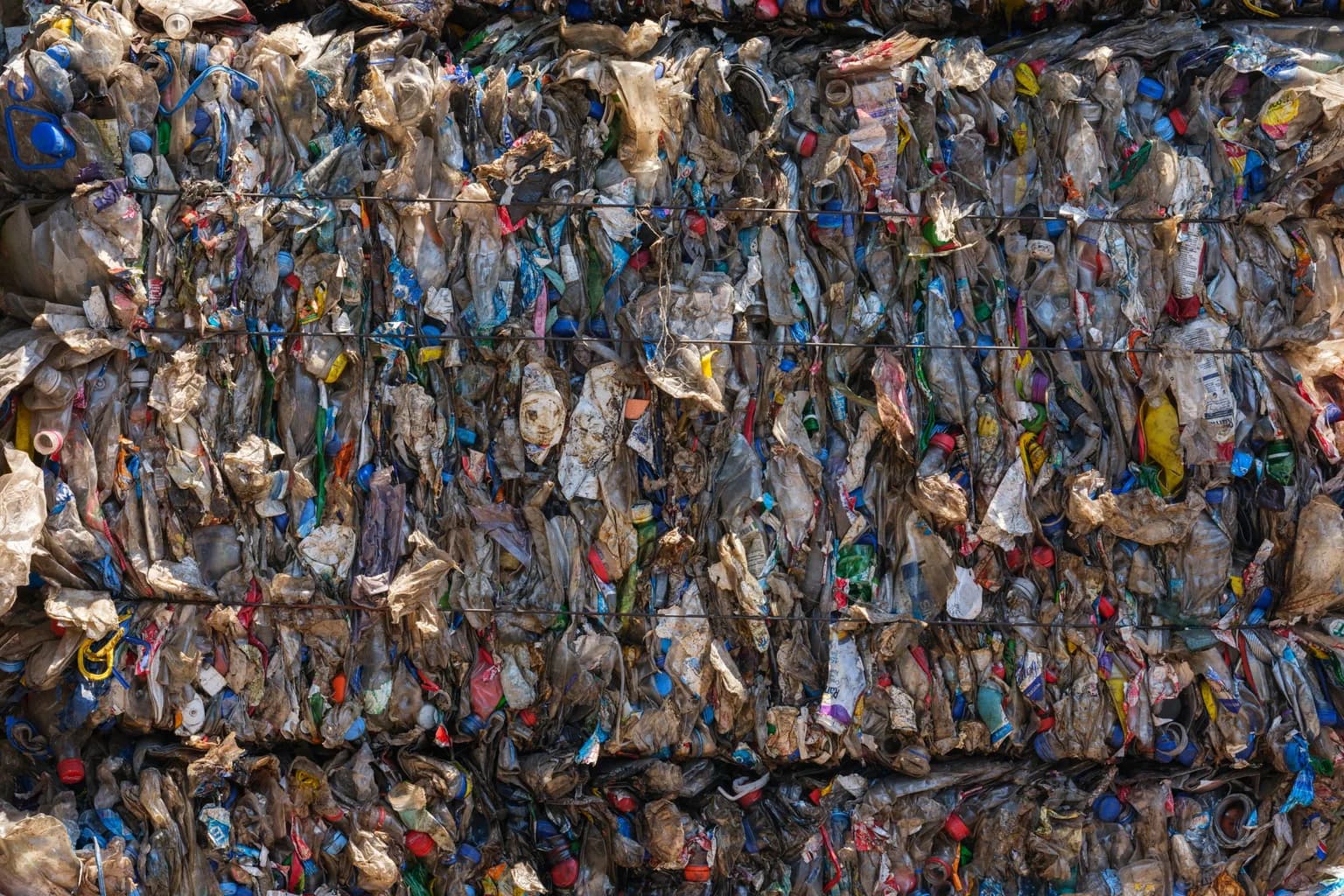
Walk any loading dock behind a busy retail floor and you will see the sector's defining waste stream: cardboard. Stock arrives boxed, gets unpacked onto the shop floor, and the boxes pile up out the back. Add the shrink wrap, pallet film, and point-of-sale display materials. A retail property moves more clean, dry cardboard than almost any other kind of building in Malaysia.
That matters because cardboard is worth money. Old corrugated cardboard is one of the most reliable recyclables on the market, and clean loads command a rebate. The problem is what usually happens to it: it gets crushed into the general waste stream and hauled to landfill. Every tonne that goes that way carries a landfill disposal charge. In the Klang Valley that is Jeram, from RM95.5 per tonne; other states have their own licensed facilities and their own rates. It also forfeits the rebate you could have earned on the same material.
Recovering that value comes down to separation at source. Cardboard has to be kept clean and dry. Pull it out at the loading dock before it mixes with wet or contaminated waste, then route it to a recycler rather than a landfill. Where a property produces the volume to justify it, a baler at the dock compresses the cardboard into mill-ready bales. Those bales fetch a better price. This is exactly what our Recycle Solutions collection is built around. Recyclables are separated at source and routed for recycling. The rebate is shared back to you rather than pocketed by the hauler. The general waste that remains still goes to landfill, but it goes there compliantly, with a documented trail for every load.
The rebate is real, but it is not automatic. It only lands if your contract is written to share it and your operation is set up to keep the material clean. For the full picture of which retail materials carry market value and how the rebate splits work, see our recycling rebate guide.
Food courts and F&B tenants create a heavier, wetter waste stream
The food court is the part of a mall that turns a clean waste programme messy. Food and organics make up roughly a third of Malaysia's waste by composition. In a mall, that share is concentrated in one zone that runs hot every lunch and dinner service. Wet food waste is heavy, it decomposes fast, and it contaminates everything it touches. One bag of food-soiled cardboard can downgrade an otherwise clean recyclable load.
So the food court needs to be treated as its own operation inside the property. That means a dedicated organics stream with tight-lidded bins. Collection has to be frequent enough that nothing sits over a weekend. And keep a hard line between the wet food waste and the dry recyclables from the retail floors. Used cooking oil is its own case again. It is a valuable, recoverable stream that should never end up down a drain or in a general bin. Our guide to food waste management in Malaysia covers how to set up the organics side properly.
The payoff is worth the effort. A food court has the same opportunity as any large kitchen: recovered organics and recovered cooking oil. It only lands when the wet stream is managed rather than mixed into everything else.
Loading docks are where a mall's waste programme is won or lost
Every stream in a mall eventually converges on the back-of-house loading dock. That shared space is the real test of a retail waste operation. Get it right and the whole property runs clean. Get it wrong and it becomes a bottleneck — overflowing compactors, cardboard stacked in fire-exit corridors, and collection trucks queuing during trading hours.
A few things decide how a dock performs:
- Compaction for cardboard and general waste. Balers for the cardboard, compactors for the residual. Both cut the number of pickups and keep the material tidy enough to recycle or dispose of cleanly.
- Pickup timing built around trading hours. Collection has to happen in the windows when the dock is not jammed with deliveries. It should also avoid the times when customers are walking past overflow.
- Shared handling instead of every tenant fending for itself. When each tenant hauls its own waste to the dock on its own schedule, the space descends into chaos. A centralised handling arrangement keeps it orderly.
- Verified pickups, not assumed ones. A missed collection at a shared dock shows up fast, as overflow. So the schedule has to be enforced, not just promised.
This is the operational layer that a spreadsheet can never manage. It needs a live view of what was collected, when, and whether the schedule held — which is where the dashboard comes in.
Per-tenant collection and centralised service solve different problems
Malaysian retail properties tend to run one of two models, and it helps to be clear about which one you have.
In the per-tenant model, every shop signs its own collector and management stays out of it. This is the legal default, and it spreads the cost across tenants. But it produces the blind spot described above: no property-wide data, no coordinated schedule, and a dock that no single party controls.
In the centralised model, the property appoints one waste service for the common areas and, often, for the tenants too. That means one schedule, one standard, one point of accountability. This is cleaner to run and far easier to report on. But it only works if the single provider can actually give you visibility per tenant and per stream, not a flat monthly charge that hides everything.
| Per-tenant collection | Centralised service | |
|---|---|---|
| Who appoints the collector | Each tenant, separately | The property, on one contract |
| Property-wide waste data | None — scattered across tenants | One consolidated view |
| Loading-dock coordination | Every tenant for itself | One managed schedule |
| Cardboard rebate | Rarely captured | Separated at source, rebate shared |
| Reporting for the board or REIT | A manual scavenger hunt | Pulled from one dashboard |
| Point of accountability | Dozens of contractors | One dedicated team |
GarGeon works with either model. In software-only mode, GarGeon Connect consolidates the collectors already working across your tenants onto one dashboard and one report, even mid-contract. You get the property-wide picture without renegotiating anything. In software plus collection mode, GarGeon runs the service through our licensed partner network. It sets up separation at source, routes the cardboard for rebate, and keeps the reporting audit-ready. Most properties move from the first to the second over time, tenant by tenant, as contracts renew.
One dashboard turns scattered tenant pickups into one property-wide number
The reason to consolidate is not a tidier admin process. A REIT board, a green-building certification, or a retail-chain tenant's own sustainability commitment all need one thing. The per-tenant model cannot produce it: a credible, property-wide waste and diversion number backed by real data.
GarGeon Connect produces it. Every collection across the property is logged the same way: weight, timestamp, and a photo of the load. It all lands behind one login. You open the property-wide view, then drill into any single tenant, zone, or stream. The cardboard tonnage recovered, the general waste sent to landfill, the food-court organics diverted: all of it rolls up from actual pickups, not estimates. When a green-building auditor asks for operational waste evidence, you export it in a couple of clicks instead of chasing dozens of contractor invoices.
The billing consolidates the same way. Instead of a stack of tenant invoices in every format, the property gets one consolidated bill, with cost broken down per tenant and per stream. The expensive tenants and the heavy streams stop hiding in the average. You can read the full mechanics on our consolidated billing guide and on the centralised billing feature page.
Sunway Big Box Mall shows what this looks like in practice. A 500,000 sq ft retail complex in Johor ran four refuse chambers blind, on paper chits and phone calls, with no shared view of what any of them were doing. All five chambers now report into one dashboard, with a disposal record attached to every load. Schedule adherence rose from 81% to 95% between April and June 2026 as fixed-schedule pickups replaced ad-hoc exchange trips. M3 Shopping Mall works the same way, with every waste request answered within 24 hours. Both started from the place a mall or retail estate lives with every day: many collection points, no shared data.
What a mall-wide waste contract should demand
A single-shop contract can be loose and still survive. A property-wide one cannot, because the same weak clause is repeated across every tenant and every stream. When you consolidate waste across a retail property, put these in writing:
- One point of accountability. One partner, one contract, one named contact who knows the whole property — not a different number for every tenant.
- Verified weight, not estimated volume. Insist on weight, timestamp, and photo proof for every pickup. "A few bins" is unauditable; kilograms are not.
- An enforced service-level agreement. Scheduled collections must be checked against what actually happened, with a missed pickup flagged automatically. That way you are not relying on an overflowing dock to find out.
- A rebate share on cardboard and recyclables. Retail's packaging volume is worth real money. The contract should return that rebate to you, not pocket it.
- A managed food-court and cooking-oil stream. The wet streams need their own handling, separate from the dry recyclables, with frequency that matches how hard the food court runs.
- Cost and tonnage visible per tenant and per stream. The contract should give you the breakdown, not bury it in a flat monthly rate across the property.
- Named licensed disposal facilities. Every load should be traceable to a licensed facility, with the record exportable in minutes when a council inspector or your board asks.
For a retail chain operating across several malls rather than a single property, the same principles apply outlet by outlet. See how we frame it for retail on our industry page.
If you run a mall or a retail estate, ask one question. Can you say, from one place, what this property threw away and what you kept out of landfill? If not, that is the problem worth fixing first. Tell us your property and the collectors working on it today. We'll show you one dashboard, one property-wide report, and where the cardboard rebate is leaking. Book a consultation to get started.