
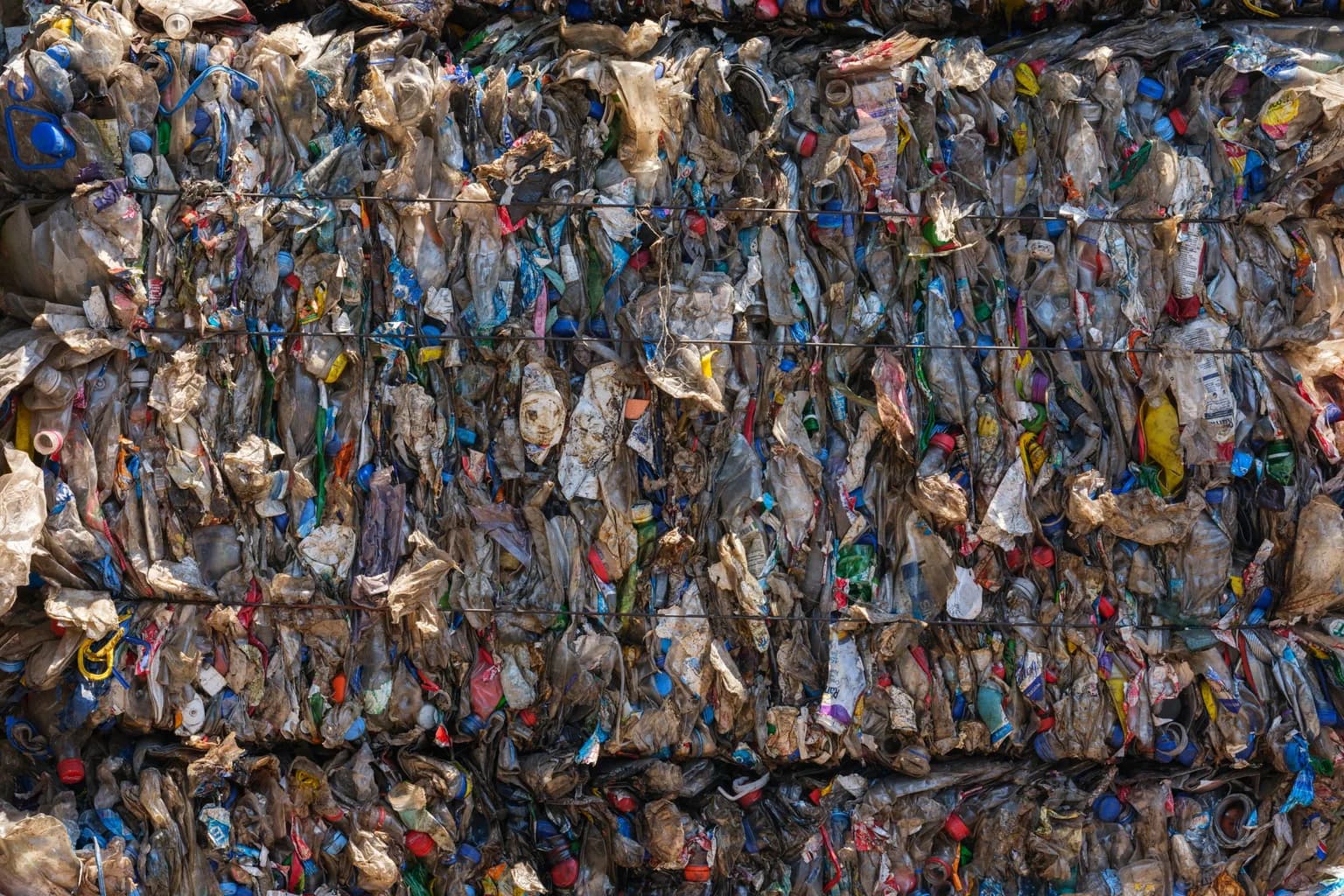
Three plastics usually have a buyer when they are clean and kept apart: PET bottles, HDPE bottles and drums, and PP tubs. Dirty or mixed film, foam and multilayer pouches usually do not, and can cost more to handle than they return. Check the resin code on what you throw away against the table below. Then capture the ones that pay.
GarGeon does not own a recycling plant. Through GarGeon Recycle Solutions, our partners collect your separated plastic across KL, Selangor and Johor. We sell it to vetted recycling buyers and share the rebate with you. The plastic nobody buys still goes out with your general waste. Both can sit on one contract for collection, recycling and reporting.
The resin code tells you which plastics a recycler will pay for
Most plastic packaging carries a resin code. It is the small number, one to seven, inside the triangle of arrows. Find yours in this table.
| Code | Where it shows up in your bins | What it is worth |
|---|---|---|
| 1 PET | Drink bottles, clear food trays | RM0.35–0.65 a kg when clean, clear and dry |
| 2 HDPE | Detergent bottles, milk jugs, drums, crates | RM0.35–0.65 a kg when clean |
| 3 PVC | Pipes, blister packs | Rarely has a buyer |
| 4 LDPE | Pallet wrap, shrink wrap, carrier bags | Clean, dry wrap can have a buyer. Dirty film rarely does |
| 5 PP | Food tubs, bottle caps, woven sacks | Usually has a buyer when clean and kept apart |
| 6 PS | Foam packaging, disposable cutlery | Rarely has a buyer |
| 7 Other | Laminated pouches, sachets | Usually no buyer. It goes to disposal |
That price is one range for clean PET and HDPE together, per kilogram. It is a guide, not a quote. It moves with the market and with how clean your load is. A rebate is a share of that price, not all of it.
To turn the range into your own figure, fill in this sum.
Kilograms of clean PET and HDPE a month ____ × RM0.35 to RM0.65 × your share ____ % = RM ____ to RM ____ a month
Your share is the split your collector agrees to in writing. We give no price for the other codes, because we have no range we can stand behind. Our recycling rebate guide has the ranges for cardboard, paper and metal. It also explains how a rebate share works.
Codes 1, 2 and 5 are the ones to capture first. Most of these items are rigid, easy to tell apart and easy to stack. If an item carries no code, treat it as code 7 until a recycler tells you otherwise.
Your mix decides whether recycling plastic saves you money or costs you. A drinks distributor with pallets of PET bottles has a rebate to earn. A snack maker throwing away laminated sachets does not. For that material, the honest goal is proper disposal with a record.
CCL Impex shows what clean capture is worth. It is a vegetable wholesaler with a steady stream of cardboard and plastic. Its recyclables were separated at source, and every collection was weighed. Recycling rose from 1–2 tonnes a month to 5–6. The monthly rebate rose from RM800–1,000 to RM1,500–2,500. The case study gives one total for all its recyclables, not a figure for plastic alone.
A container that held chemicals or oil can be scheduled waste
Before you read the resin code, check what the container held. Some plastic waste counts as scheduled waste, the legal name for hazardous waste. The Department of Environment (DOE) regulates it under the Environmental Quality (Scheduled Wastes) Regulations 2005. Two entries in those regulations matter for plastic.
- SW 409. Containers, bags or equipment contaminated with chemicals, pesticides, mineral oil or scheduled waste.
- SW 410. Rags, plastics, papers or filters contaminated with scheduled waste.
So an HDPE drum that held chemicals, pesticides or mineral oil can be scheduled waste, whatever its resin code. A mix of scheduled and ordinary waste counts as scheduled waste too. Keep these containers out of your plastic bins.
We do not collect or treat scheduled waste: where a site has it, a DOE-licensed contractor takes it, and we keep its records with the rest. You can check a contractor on DOE's eSWIS list of licensed scheduled-waste facilities and transporters, at eswis.doe.gov.my.
Three things turn plastic a recycler would buy into a rejected load
A recycler pays for a clean load of one plastic because it can process and resell it. Three things get a load downgraded or rejected.
- Food and liquid left inside. A bottle with drink still in it fouls the batch. So does a tub coated in sauce. Drain every container, and rinse it where you can.
- Different plastics in one bag. PET, HDPE and PP are recycled apart. Mixed together, they sell as a low-grade bale or not at all.
- The wrong plastics in the load. Pouches, foam and cling film in a rigid-plastics bin drag the load down to its worst item.
A rejected load still has to go somewhere. It goes to landfill, after you have paid to handle it as recycling. So be wary of a promised rebate on a dirty, mixed bin. For dirty plastic, the realistic outcome is proper disposal with a record, not resale.
The fix is at your site, not at the recycler. We do not sort your waste after it leaves.
Use this checklist to keep your plastic clean at the source
You do not need a sorting line or new machines. Each plastic has to go into the right bin at the point it is thrown away. Your team does the separating. Tick these off.
Do not buy bins for plastic nobody will pay for. Low-value film can stay in general waste until you find a buyer for it.
Plastic thrown into a general bin and pulled out later is already dirty. That is why each bin sits where the plastic appears. Our guide to source separation across sites covers how to make the habit stick.
Not sure what is in your bins? We start with a free waste audit. It takes about a week and weighs each waste stream, plastics included. Our waste audit guide shows the baseline you get.
Ask where your plastic goes after it leaves your site
Separated plastic should reach a recycler. Ask whoever collects yours two things, and get both answers in writing.
- Which recycler takes my plastic?
- What share of the sale comes back to me?
We do not claim that everything is recycled, because it is not. Clean PET, HDPE and PP go to vetted recycling buyers. Dirty film, pouches and foam still go to landfill. Each pickup is logged in GarGeon Connect with a photo, a timestamp and the weight.
A photo proves the pickup, not where the load went. Our guide to verifying your recycling has six steps for checking any recycler.
Plastic you recycle also comes off your disposal bill
There is a second gain before any rebate. Each tonne you keep out of general waste is a tonne you do not pay to dispose of. Disposal costs from RM95.50 a tonne. That is the rate our partner collectors are charged, passed on at cost. Collection is charged per trip, depending on distance and bin type.
Our recycling versus landfill cost guide has a worksheet for your own net cost. If you run a factory, our manufacturing page shows how this fits a plant.
Tell us what your site throws away and who collects it today. We will begin with the free audit and show you which plastics are worth capturing. Book a consultation to get started.


